1. Lord Hanuman is believed to have invented this fret-less beautiful string instrument and played it, hence this instrument has been named after the Lord as “Hanumathvina” which is popularly known as Gotuvadyam and the same has been renamed as Chitravina.
2. There are two types of music existing universally. One is that which is being rendered/played by human beings living in this material world, called as “Maanusha Ghana” and the other one is known as “Deva Ghana” being rendered/played by the celestials like Thumburu, Naradha, Nandhi and others. Here, Lord Hanuman, the Nava-vyakarana Panditha’s, playing is Devaghana. To represent this, His left side YALI is facing up-ward and listening to his divine music, which we don’t see in the instruments in this Manusha Boomi.
3. In order to represent that Lord Hanuman is a devotee of the Rama Avathara (incarnation) of Vishnu, he adorns Vishnu’s CHANGU & CHAKRA on both the sides of his Hanumathvina.
4. While playing the instrument Hanuman’s full concentration is only on his master Lord Sita Rama.
5. Usually when one sits in Padmasana posture both feet’s toe would be facing upward. Since Hanuman’s visualizing his Master before him and playing the instrument even while sitting in Padmasana posture he is keeping both his feet’s toe facing downwards.
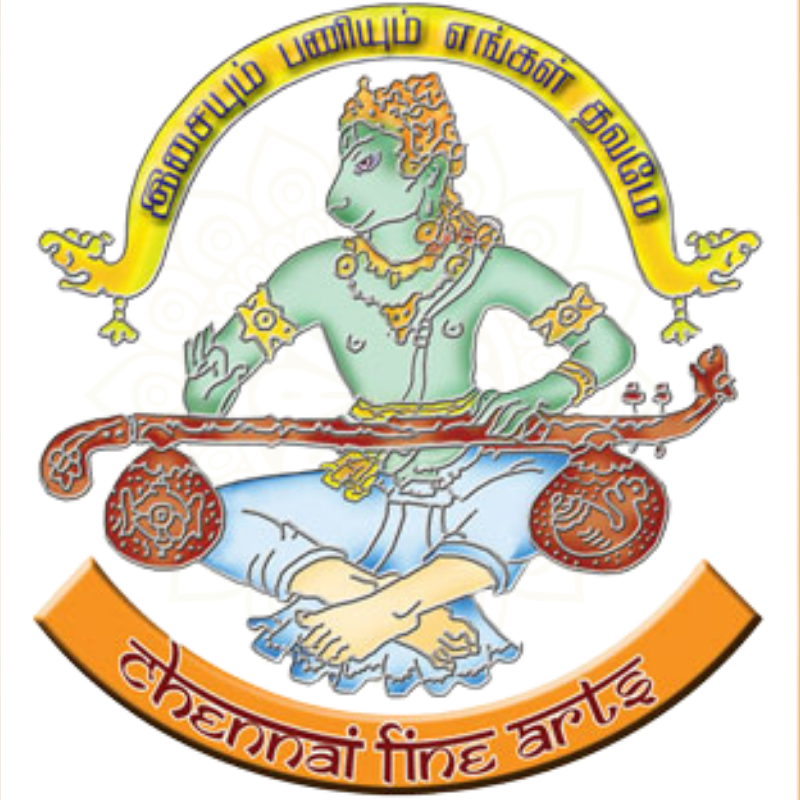
6. Since hanuman is playing in front of his Master his Angavasthiram has been tied over his belly representing Shishya bhava.
7. After receiving the Choodamani from Goddess Seetha, Hanuman never kept it down. He always wears it in his Kreetam (head), which has been represented here.
8. Every Hindu deity adorns the Thiruvachchi or Prabai, which is again considered to be very a sacred ornament as per the Hindu Mythology/ Agama Sastra. Chennai Fine Arts aims to do sacred service and that represents the Prabhai for Lord Hanuman with the words ‘Isaiyum paniyum engal thavame’.
9. Seven colours have been used in the logo, namely Yellow, Green, Blue, Saffron, White, Orange and Brown.
Why and when this logo & composition raised?
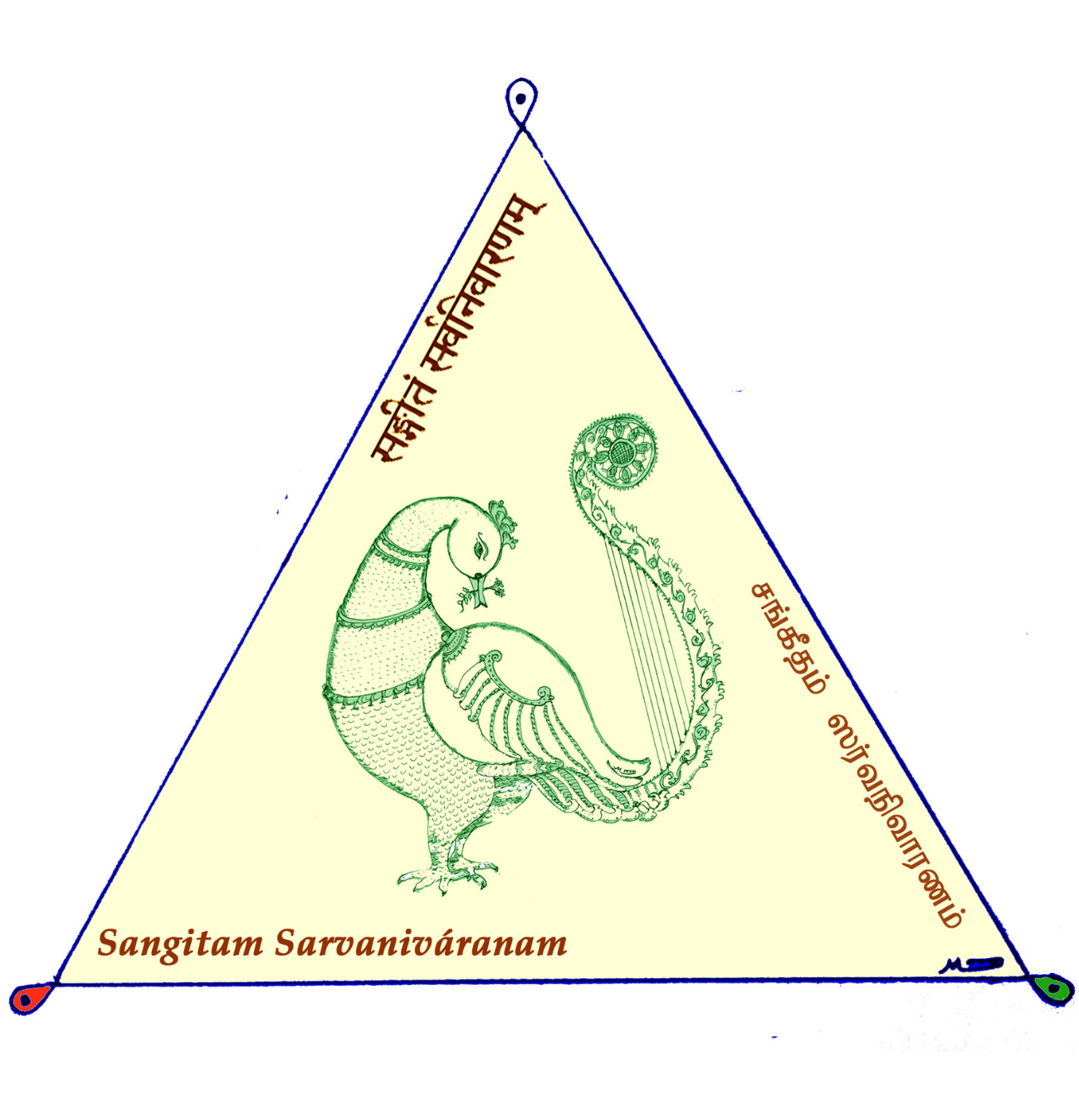
During the Covid-19 pandemic, when no one could go outside for long periods, a quiet and reflective time arose. In that moment, the thought “Sangeethamē Sarva Nivāraṇam” (Music is the universal remedy) came to mind. As a result, a logo was created to embody this idea. Furthermore, a song was composed with Pallavi–Anupallavi–Charanam, praising the power of music to remove sorrow and establish joy. Logo conceived and drawn by and suitable composition penned by P N Muralidharan
கோவிட்–19 தொற்றுநோய் பரவிய காலத்தில், யாரும் நீண்ட நாட்கள் வெளியில் செல்ல முடியாத நிலை ஏற்பட்டது. அந்த அமைதியான, சிந்தனைக்குரிய நேரத்தில், “ஸங்கீதமே ஸர்வநிவாரணம்” என்ற கருத்து மனதில் தோன்றியது. அதன் விளைவாக, அந்தச் சிந்தனையை பிரதிபலிக்கும் லோகோ உருவாக்கப்பட்டது. மேலும், இசையின் சக்தியைப் புகழ்ந்து, துன்பங்களை நீக்கி இன்பத்தை நிலைநிறுத்தும் பல்லவி–அனுபல்லவி–சரணம் கொண்ட பாடல் இயற்றப்பட்டது.
இந்த பாடல், இசை என்பது உலகளாவிய மருந்து, அது பொறுமையையும் அமைதியையும் தருகிறது, குருவின் வடிவில் அன்னப்பறவை, யாழுடன் இணைந்து, துன்பத்தை நீக்கி இன்பத்தை நிலைநிறுத்துகிறது.
Sangeethamē sarva-nivāraṇam
Behag, Ādi tāḷam
Pallavi
Sangeethamē sarva-nivāraṇam
Sandēgam adhil saṟṟum illai;
Anupallavi
Pongum paripūraṇam
Porumaiyum amaidhiyum kūdum;
Charanam
Tannigarillā dharanidanda paṟavai;
Annaththin vadivilē āsānaik kāṇbōm;
Chinnamāga ēṟṟōm sītharapadai yāzhudan;
Thunbam nīngi inbam engum nilaikkavē.
ஸங்கீதமே ஸர்வநிவாரணம்
பேஹாக், ஆதி தாளம்
பல்லவி:
ஸங்கீதமே ஸர்வநிவாரணம்
சந்தேகம் அதில் சற்றுமில்லை;
அனுபல்லவி:
பொங்கும் பரிபூரணம்
பொறுமையும் அமைதியும் கூடும்;
சரணம்:
தன்னிகரில்லா தரணிதந்த பறவை;
அன்னத்தின் வடிவிலே ஆசானைக் காண்போம்;
சின்னமாக ஏற்றோம் சீதரபடை யாழுடன்;
துன்பம் நீங்கி இன்பம் எங்கும் நிலைக்கவே.
Brief Meaning:
Music is the universal remedy; There is not the slightest doubt in it. It overflows with completeness, bringing patience and peace together. The peerless bird gifted by the earth; In the form of the swan, we behold the teacher. We symbolically raise him with the celestial yāzh (lyre); So that sorrow departs and joy may prevail everywhere.
This composition celebrates music as a divine force; a healer that removes doubts, fills life with serenity, and uplifts the spirit. The imagery of the swan (Annam) represents purity and the guru, while the yāzh (ancient Tamil harp) symbolizes tradition and harmony. Together, they affirm that through music, suffering is dispelled and bliss becomes eternal.
The triangle shape in the Sangeetham Sarva Nivāraṇam logo symbolizes the flow of energy. From the top point, representing the teacher (guru), knowledge and inspiration enter. This energy then spreads outward through the base, reaching the many students (śiṣyas). Thus, the triangular format was chosen to reflect how music, guided by the teacher, radiates to all, removing sorrow and establishing joy everywhere. This concise note ties the visual symbolism of the triangle directly to the philosophy of guru–śiṣya paramparā in music.
This is a book on Vidvan Parupalli Ramakrishnayya Pantulu, who was instrumental in popularizing Carnatic music in Andhra Pradesh. He had a number of disciples there but is not much known here. This book gives details of his life history and sishya parampara.
This book is a compilation of interviews from as many as forty artistes, on the eight centenarians of the year 2012 namely Alathur Srinivasa Iyer, Mayavaram Govindaraja Pillai, Alangudi Ramachandran, Palghat Mani Iyer, T K Rangachari, Madurai Mani Iyer, T Brinda and Mannargudi Sambasiva Bhagavatar. This book consists of rare information and many personal experiences of popular musicians.
Published by CFA during the first music festival of December 2003, this souvenir has articles about the Gotuvadyam maestro, Shri. Narayana Iyengar. The book gives complete details of the life and musical background of Narayana Iyengar. Various music scholars, musicians and musicologists have contributed to this souvenir. The list of articles in the souvenir are as under.
1. Gotuvadyam Narayana Iyengar – Trailblazer – Introductory article
2. Sangita Kalanidhi on Nada Kalanidhi – Translated excerpts from the interview held with the late Sangita Kalanidhi Dr. Semmangudi Srinivasa Iyer
3. Saraswati Incarnate – Excerpts from the interview with Kallidaikurichi K.H. Mahadeva Bhagavatar
4. Nada Saukhya – Translated excerpt from an interview with Veena Vidushi Smt. Ranganayaki Parthasarathi
5. Bond with the blood – Translated excerpts from interview with Sarvasree Padmanabhan
6. Admirer of Narayana Iyengar – Raghavan
7. My illustrious father – Translated excerpts from the interview with Chitravina N. Narasimhan
8. The incomparable Chitravina – Chitravina N. Ravikiran
9. Impeccable virtuosity – C.V. Narasimhan
10. Vimarsakar paarvayil vidwan (Tamil) – Subbudu
11. The Wizard of Gotuvadyam – S. Rajaram, Director, Kalakshetra Foundation
12. Gayaki with a Gotu – K.S. Mahadevan
13. Instrument sings – Dr. Gowri Kuppuswamy
14. Gotuvadyam Narayana Iyengar (Tamil) – S. Rajam
15. Chitraveena – Dr. B.M. Sundaram
16. Unforgettably impeccable – K.R. Kumarasami Iyer
17. Gotuvadyam Uncle – V Ramachandran
18. Lingering Hamsanandi – Belakawadi Srinivasa Iyengar, Asthana vidvan, Mysore Royal court
19. Unforgettable Days – Veena Vidwan R.N. Doreswamy
20. Haunting Javali – Parur M.S. Anantharaman
21. Dazzling instrument – Dr. R.K. Srikantan
22. Glorious Gotu vidwan – Madras A. Kannan
23. Gotuvadya Samrat – Dr. Sampath Kumaracharya
24. Narayana Iyengar in Varanasi – Harish
25. Surprising Veena that surprises – P.N. Muralidharan
26. Gotuvadyam Maestro – T.S. Parthasarathy
27. The divine Hanumad Vina
28. Articles published earlier in newspapers
This book authored by Karur R. Narayanan in Tamil was published in the year 2005. The contents of this book are
30 Non-vivadi mela ragas and janya raga slokas of 1008 janya ragas
Acronyms of Melakartha ragas
Details of 72 melakarthas and chakras
Rare slokas of svaras
Technique for finding the Melakartha number
Compilation of ragas
Compilation of ragas with similar starting or ending words
22 srutis, 35 talas and Tamil raga names
Table of svaras of 1008 ragas
This was published during the first-ever Balamurali Music Festival in the year 2012. In this work, the author Dr B M Sundaram, the first disciple of Dr Bālamuralikrishnā, has given a brief life history and music of his Guru. Then he proceeds further to give analytical details of nine varnas, eleven rāgas created by him, three rāgamālikas, compositions under eight various heads, dēvaranāmas, padams, jāvalis and tillānas.
This is another published in the year 2007. This book is a compilation of 41 compositions of Madurai Shri. G.S. Mani, all in Tamil language. The compositions are on various deities and themes like Vinayaka, Muruga, Vishnu, Siva, Hanuman and philosophy. The book also includes a compact disc of the compositions sung by the author himself.
This book was published in the year 2007. Authored by S. Gopakumar, the title of the book refers to the percussion instrument Arumukhanam, invented by the author. This book has been written to help those who are interested in learning this new instrument. The lessons and explanations have been given in six different languages like the six faces of the instrument.
This was published to commemorate the third anniversary of Chennai Fine Arts in the year 2005. This souvenir carried eighteen articles on divine composers contributed by various music scholars and musicians. The contents of this souvenir are as follows.
1. Tiruthondar perumai – Perangiyur P. Srinivasa Raghavan
2. Thuyya Kulasekaran – Kalyanapuram R. Aravamudhan
3. Anecdotes, Apocryphals and Myths about Purandaradasa – Dr. V.V. Srivatsa
4. The brilliance of Oothukadu Venkatakavi – Chitravina N Ravikiran
5. The message of Syama Sastri – Dr. T.N. Ramachandran
6. A Vaggeyakara among Maharajas – Dr. B.M. Sundaram
7. Kathakalakshepa and performing arts – Dr. Premeela Gurumurthy
8. Padams & Javalis – Kiranavali Vidyashankar
9. Tyagaraja – en anubavam – S.V.K.
10. Niraval Singing – Suguna Purushothaman
11. Engum Ragangal – Nimalan
12. A composer par excellence Tanjavur Sankara Iyer – Dr. S. Sunder
13. Bagavathaarpanam – Nadopasana Srinivasan
14. Vaggeyakara Vachaspati – Dr. B.M. Sundaram
15. Mangala Vadyam – Haridwaramangalam A.K. Palanivel
16. Vedaneriyum Sangita Kalacharamum – Brahmasri A Subbukrishna Somayaji
17. Tamizhisai tandha vallal – P.N. Muralidharan
18. Saptasvaram – S. Rajam
This book authored by Dr. B.M. Sundaram is a compilation of the musical compositions of the author, who is a prime disciple of Dr. M. Balamuralikrishna. It was published in the year 2008. There are totally sixty compositions including Tana Varnas, Krtis, Operas and Tillanas. These songs are on various deities and philosophical themes. A few rare ragas like Putrika, Katyayani and Sowjanya have been handled by the composer.
This book authored by Dr. B.M. Sundaram was published during December 2009. The work is a compilation of 3944 scales of ragas. These ragas have been compiled from various sources of books and manuscripts and other sources namely,
Sangita Parijata of Ahobala
Annasvami Sastri’s Manuscripts
Karunamruta Sagaram of Abraham Panditar
Bharata Kosa of Manavalli Ramakrishna Kavi
Mysore B.K. Padmanabha Rao
Dr. M. Balamuralikrishna
Dr. B.M. Sundaram
Raga Nidhi of Subba Rao
Key to Hindu Music by Chittibabu Naidu
Sangeeta Darpanam by Chatura Damodara
Sangeeta Chandrikai of Salem Manikka Mudaliar
Chaturdandi Prakasika of Venkatamakhi
C.R. Srinivasa Iyengar
Kakinada C.S. Krishna Iyer
D.A. Dhana Pandian
Ennappadam Venkatarama Bhagavatar
Gaana Bhaskaram of Taccur Singaracharyulu
Gaayaka Lochanam of Taccur Singaracharyulu
Gaana Manjari of Veenai Krishnamachariar
Gaayaka Siddanjanam of Taccur Singaracharyulu
Gaana Vidya Prakasini of Perungulam Srinivasa Iyengar
Harikesanallur Muthiah Bhagavatar
Bharatiya Sangita Swayambodhini of Johannes Sundararajan
Mysore Jayachamaraja Wodeyar
Kalidoss Neelakanda Iyer
K.N. Srinivasan
The Music Academy, Chennai
Poochi Srinivasa Iyengar
Prof. P. Sambamurthi
Pallavi Seshayyar Manuscripts
Maha Bharata Chudamani
Meesu Krishna Iyer
Sangita Svaraprastara Sagaramu of M. Nadamuni Pandithar
Mudikondan Venkatrama Iyer
Mysore Vasudevachar
Nagapattinam Veerasvami Pillai’s Manuscripts
Kanchipuram Naina Pillai
Chitravina N Ravikiran
N.S. Ramachandran
Mysore Veenai Padmanabiah
Paripooranan
Ambattur P.K. Rajagopala Iyer
Mysore Sadasiva Rao
Mysore R. Chandrasekhariah
Raga Lakshanam
Mysore C. Rangaiah
Raga Kosa of Bangalore R.R. Kesavamurthi
Raga Tala Chintamani of Poluri Govinda Kavi
Raseepuram Venkagapati
Sangeet Magazines, Hathras, UP
Sirugamani Sivaramakrishna Bhagavatar
Sangraha Chudamani of Govindacharya
Sangita Kalanidhi of Taccur Singaracharyulu
Sangita Kaumudi of Tiruvaiyaru Subramanya Iyer
Sangita Sampradaya Pradarsini of Subbarama Dikshitar
Sangita Sara
Sangita Svara Bhooshani by Narayanadoss
Sangita Sara Sangrahamu
Tamil Isaippadalgal – Annamalai University
T.A. Sambandamurthi Asariyar
Manuscripts from Tanjavur Sarasvati Mahal Library
TMT
Tirupati Vidyala Narayanaswamy
Coimbatore T.R. Venugopala Naidu’s Manuscripts
Tanjavur Sankara Iyer
Sangita Saramruta of King Tulaja
Tenmagam Narasimhachari Brothers
Mysore Veenai Venkatagiriyappa
Tirumuruga Kripanandavariar
Mysore Veenai Seshanna
Vizianagaram Manuscripts
“Gems of Sadashiva” is the fifth book containing the compositions of Mysore Sadashiva Rao. It is compiled in English and contains 54 compositions out of which 43 are with notations and for the rest, only text is available. This edition also includes songs (sahithyams) printed in Tamil script. This was published during the 250th Birth Anniversary of Saint Tyagaraja.
“Dhanam” is a monograph on Veena Dhanammal, commemorating her 150th birth anniversary! It has details about Dhanammal’s lineage and the nuances of her music written by Dr BM Sundaram and ‘Sangita Kalanidhi’ Chitravina N. Ravikiran respectively. The publication was co-sponsored by Ranga Mandira’s TS Parthasarathy Endowment.